Reference: National Fisherman, March, 1979
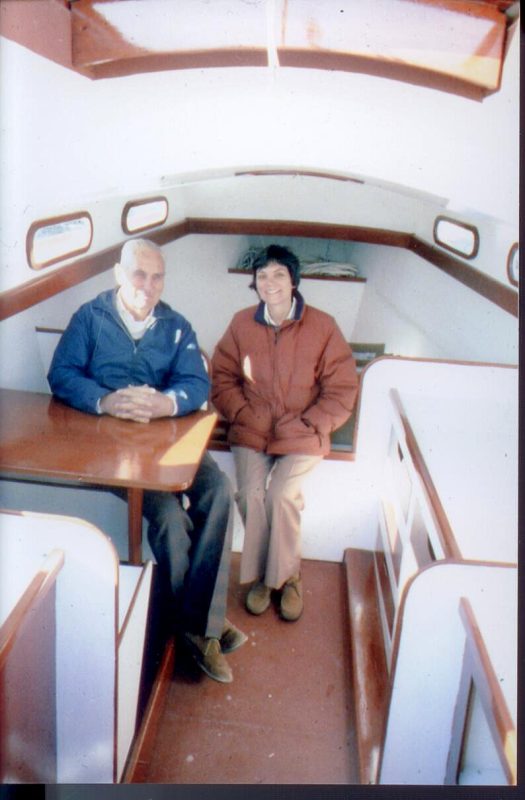
While cruising the Bay in their deep-draft sailboat, Gilbert and Virginia Klingel were often intrigued by the creeks and shallows they could not access. As a retirement project, Klingel designed a flat-bottom sailing scow with the idea of accessing those remote spots.
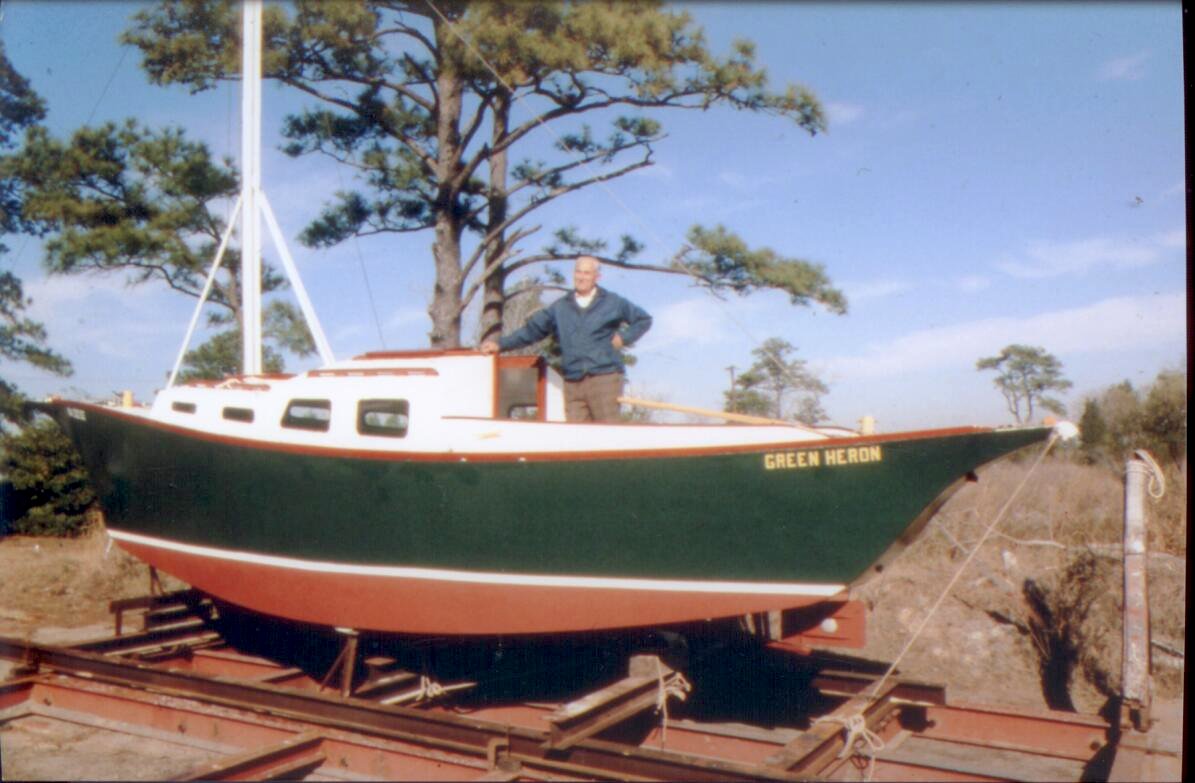
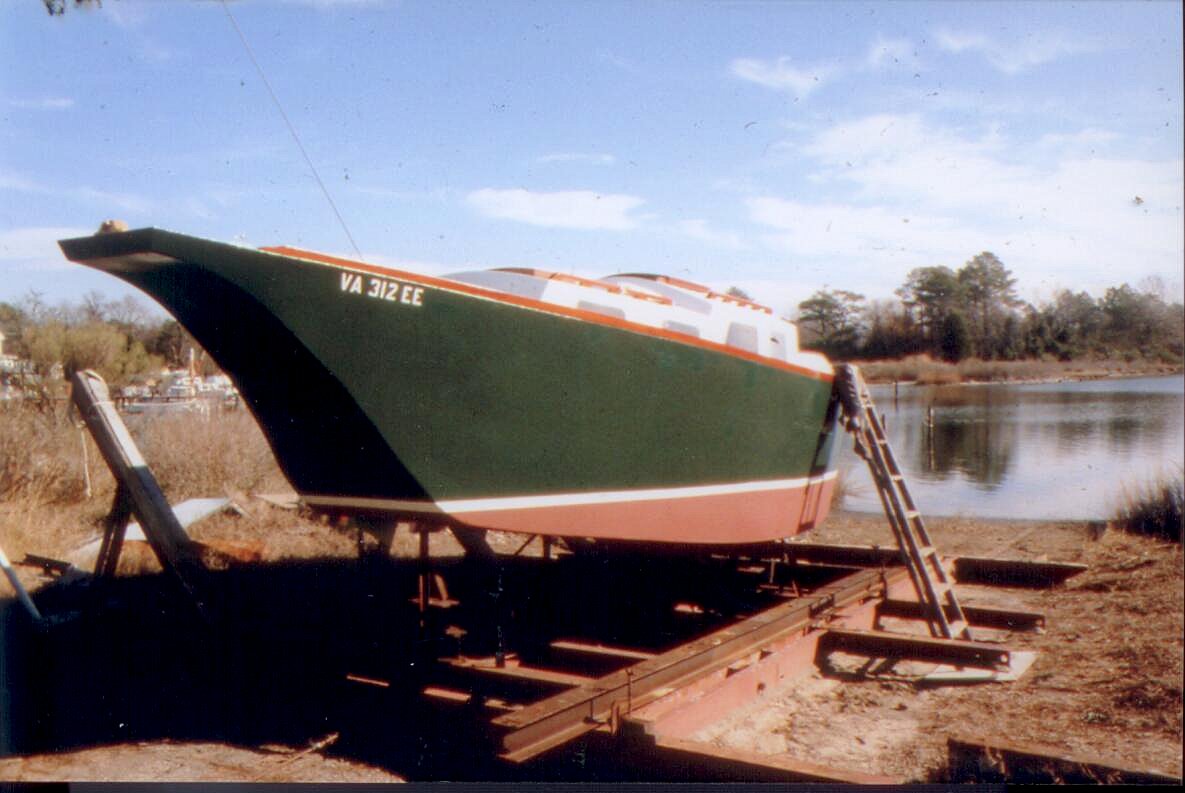
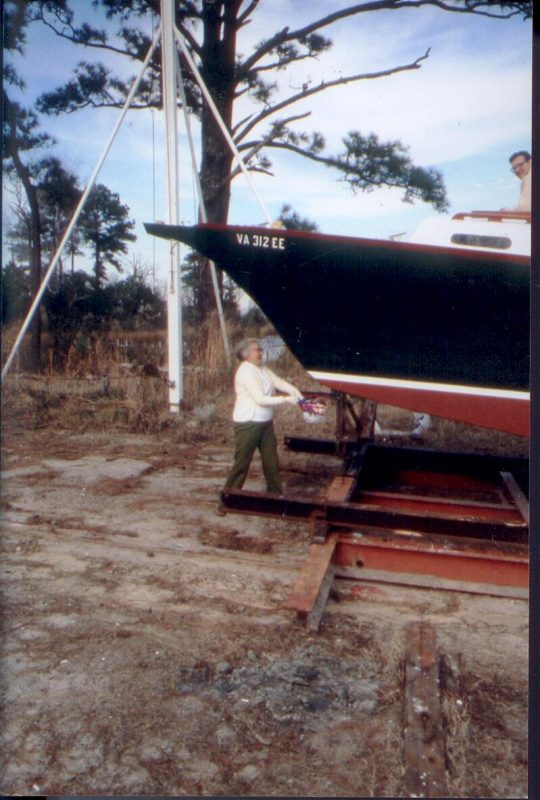
Drawing on his memories of Vietnamese sampans of the Mekong Delta, he worked up the design, mimicking the upsweeping curves of the sampan’s bow and stern. Klingel then developed the lines for construction of the 30-foot boat from sheets of mild steel. For the sailing rig he chose a “lateen-sail”, which is a simple triangular sail similar to what is seen in Sun and Sailfish sail boards. The rig is easy to set and manage by one or two people. The mast is very short and allows passage under bridges or overhanging trees and could act as a support for a boom-tent to cover the cockpit. The boat never had a keel or centerboard installed, the idea being that the hard bottom “chine” would have enough grip on the water to prevent being driven to leeward. If the boat could not make headway they could rely on the inboard 10-hp Volvo diesel, or just “wait it out” for better winds, the Klingel’s were, after all, retired! On December 17th , 1978, Green Heron was launched on the 3rd strike of a Champaign bottle from Klingel’s Gwynn’s Island boat yard.
In addition to building steel boats, Klingel was a pioneer in the field of underwater exploration, developing the “Bentharium”, a submersible designed to be lowered to the bottom of the Bay for extended periods. He also used a hard helmet for diving and making observations of the sea floor and developed and built the “Aquascope” another submersible that was financed by National Geographic. It was used to observe and photograph the various creatures to be found in the lower depths of Chesapeake Bay. Klingel reported on this with an article in the May, 1955 edition of National Geographic, “One Hundred Hours Beneath the Chesapeake”. Klingel was also author of “The Bay” a compilation of naturalist’s writings covering life found above, on and under the waters of the Chesapeake Bay, and, “Inagua” a recounting of a spectacular sea-adventure and shipwreck in the islands of the Bahamas in the early 1930s. Klingel is also the author of the
definitive book “Boatbuilding with Steel”.
Green Heron was found in its current state of disrepair in the early 2000’s and brought to the Mathews Maritime Museum for display. Steps have been taken to stabilize and preserve the vessel; but significant investment in resources will be required to return her to her original state.